Showing posts with label insurance companies. Show all posts

Monday, October 16, 2017

How to Start a Small Business on a Shoestring Budget

How to Start a Small Business
Have you ever had an idea for a small business? Maybe it’s a unique product you believe would be a hit, or a brick-and-mortar storefront that would provide a needed service to a neighborhood.
For those would-be entrepreneurs who actually take steps to realize their business idea, however, many eventually hit a brick wall. Financing a business startup can often prove too big of an obstacle or present too much of a commitment in time and resources. As much as you may want to run your own small business, quitting your full-time job and mortgaging your home in order to get a business off the ground can be too much risk to take on.
But many businesses can be started on a shoestring budget without a full-time obligation. In fact, some of the best small business ideas can be found in favorite hobbies you’re already doing in your spare time. There are countless stories of entrepreneurs who turned their weekend passions into full-time, successful businesses. The key to a successful shoestring startup is to combine an activity you enjoy with an identified business niche.  It’s also wise to protect your new startup and its assets with the right business insurance, such as Nationwide’s businessowners policy (BOP), designed with the small business owner in mind.

Building a hobby into a business

Following a passion can be a key ingredient in a successful shoestring business, which is loosely defined as requiring less than $1,000 in startup costs. Such startups should not require special skills, or skills that can’t be acquired in a short time with the right resolve.
An example of a shoestring business might involve a person’s love of photography—the shutterbug who is always taking photos of family events or nature scenes. That passion could be parlayed into work in wedding photography, gaining experience by assisting an established photographer or building a portfolio by photographing friends’ or family members’ weddings for free. It’s also a business with working hours on the weekends, making it easier to manage with a full-time job.
Likewise, an avid hiker and outdoor enthusiast could turn his passion into a business by leading tours as a field guide. Or, a dedicated knitter could build a following by selling her unique patterns and designs online.

Promoting your new business

Small business owners such as these are able to keep marketing expenses on a shoestring level by promoting themselves through word-of-mouth, or by designing a website on the cheap to help drive business. Social media sites such as  Instagram and Facebook are excellent tools to attract customers and are free—other than the time needed for posting content.
Harnessing the power of social media is a great no-cost way to promote a shoestring startup, such as one inspired by a love of food and cooking. Whether you enjoy baking desserts or re-creating beloved family recipes, posting a menu and photos of your day’s offerings and taking delivery orders can be done online or through popular mobile apps with no overhead costs required. A food-centric business such as this can also gain customers at farmers markets or as a street vendor tweeting out times and locations to followers.

Protecting your new business

While money can be tight for a startup, you shouldn’t cut costs when protecting your company and yourself from the risks involved with running a business. Luckily, Nationwide offers customized insurance solutions tailored to your budget and needs. Learn more about how small business insurance can help build and protect your company, and request an online quote today.

Monday, September 25, 2017

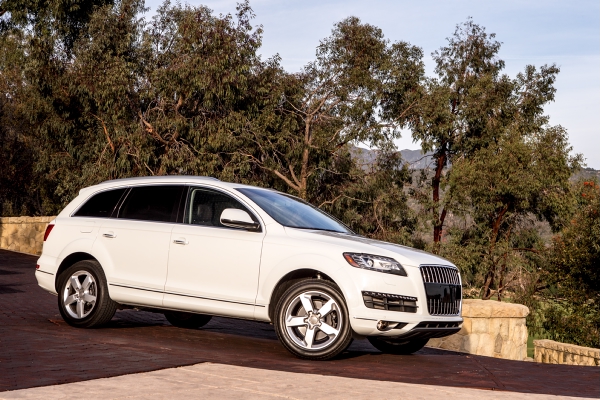
Key Tips for Buying a New Car

Tips for buying a new car
Car shopping can be a stressful event even for the savviest negotiator. For most people a car is the second most expensive purchase they’ll make next to buying a home — all the more reason to be prepared and have a plan for picking a car out and financing the purchase. A snap decision at the dealership can easily lead to buyer’s remorse you’ll have to live with for years.
“All big purchases can be stressful,” says Wade Newton, spokesperson for the Alliance of Automobile Manufacturers, “and considering how durable cars are today, they can be a long-term commitment.”
Your car purchase needs to start long before you set foot in a car dealership – with background work that will pay dividends not only financially but for your peace of mind.

Determine your budget

Like any major buy, determine your budget and define your needs within that constraint. Your car expense shouldn’t exceed 25 percent of your monthly household income, and that includes all of your vehicles. Besides monthly auto loan payments, you should factor in operating costs such as gas, maintenance and insurance.
Once you know how much you’re able to spend, you can start to narrow down the list of cars you want. It’s one of the fun parts of buying a car, but with challenges of its own. “Consumers have seemingly endless choices when it comes to buying a car, which is a good thing,” says Newton. “But it also means you have to look around at all of the options. Automakers provide hundreds of different models designed to meet a variety of needs, and consumers’ options are growing.”

Conduct the necessary research

Start by visiting the websites of automakers and other car sites to get an idea of model inventories and features available in your area. With your list of preferred choices, you can then look at whether you want to lease or buy new or pre-owned. Used cars offer the best upfront value but have shorter warranties and higher loan interest rates. “If it’s not a new auto, always be sure the vehicle isn’t under an active recall,” says Newton. “It’s easy to check at safercar.gov, and you can search by VIN.”
Leasing a vehicle allows you to get a more expensive car, but there are restrictions to “ownership” and you’ll have to turn the car in after the lease term is up. If you choose to buy new, you may not have the budget for as many features, but you’ll get a full warranty and lower interest rates. Use an auto payment calculator to determine how much a car loan for a new car would cost.

Determine total ownership costs

After you determine the exact model you want, you can calculate the monthly insurance and fuel expense to figure your total ownership costs. You’re then able to shop for the best pre-approved financing deal through a bank or credit union. Dealers sometimes offer loan incentives for the model you’re after, as long as you qualify. Either way, having your financing secured before you walk into the dealership can make for a simpler, less-stressful process.

Know the price of the model you’re leaning towards

Next, research your model’s invoice or wholesale price. This gives you a general idea of what the dealer paid for the vehicle and puts you in a better negotiating position. Shoot for a sales price close to that amount before any discounts, keeping in mind that dealers need to make at least some profit to stay in business.
Speaking of discounts, check the automaker’s website for promotions or rebates. You may also find discounts aimed at specific groups, such as students or military personnel. Whatever rebates, discounts and other incentives you uncover can usually be combined.

Go for a test drive

With all your research in hand, you’re finally ready to visit the dealership. Make an appointment for a test drive, and take your time behind the wheel until you’re sure it’s the right fit for you. Play with the controls and make sure the car’s features fit your needs. For example, is the trunk large enough for all the items you plan to carry? If you have regular passengers, will they be comfortable?

Negotiate a fair price

When you’ve made your decision to buy, you can start the negotiating process. If you have a trade-in, keep the two separate and focus on the new car, factoring in the discounts you’ve researched. The dealer will have a list of fees associated with the sale; check that each is accurate and not an unnecessary add-on.
Finally, if something doesn’t feel right with the car or the deal, don’t be afraid to walk away.

Monday, July 31, 2017

What Kind of Motor Oil Should I Use?

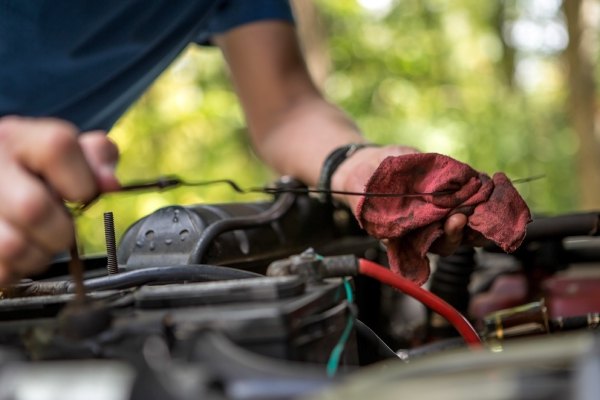
what oil for my car
For consumers who are looking for ways to save money, motor oil seems like a good place to cut some costs. While it’s a relatively low-cost item, you can quickly run up expenses by using the wrong oil. Read on to get answers to your questions about motor oil.

What motor oil do I need for my car?

Because engines vary so widely across makes and models, auto makers recommend specific types of motor oil for each vehicle. This information can be found in your owner’s manual, which you should always keep in your glove box.
Always ensure that the oil that’s going into your car is designed specifically for automotive use or it can cause permanent damage to your engine. If you lost your owner’s manual or you’re not sure what you need, check with the dealership where you bought your car and get their advice on what is best for your particular vehicle.

Synthetic oil vs. conventional: which is better?

Not all oil is created equal, so in order to keep your car running properly it’s important you know what you’re getting – and what you need. Many of today’s cars use lightweight synthetic oils that aren’t readily available on the store shelves. If you find yourself in need of a quart of oil between oil changes – or if you’re going to change the oil yourself – it’s important you check your owner’s manual and find out exactly what you need.
Remember that if your car uses synthetic oils, you shouldn’t use traditional oil, it can compromise the longevity and performance of your engine. However, it is fine to use synthetic oils in an older car that has previously only used conventional oil. It’s important that you read your owner’s manual and know what needs to go into your vehicle.

Should I buy cheap motor oil?

You don’t have to spend a fortune on motor oil; there are several ways to save money on motor oil without sacrificing the safety of your vehicle. They include:
  • Shop for oil at a wholesale club or at big-box discounters
  • Buy oil by the case, which usually offers some sort of discount
  • Join a rewards program at an automotive parts retailer, and you can typically earn rewards or get discounts on your future purchases
If you need multiple bottles of oil, it‘s cheaper to buy it in a one-gallon jug, although many people find such a big bottle difficult to handle. (You can always pour it into a smaller container when adding the oil to your vehicle, to keep from spilling it on the engine.)
You may find some great prices online, but look for a seller that offers free shipping. Since motor oil is a heavy liquid, you may find the shipping cost offsets any potential savings.
While we all want to save money, remember that it stops being a bargain the minute it causes damage to your vehicle. Knowing what to look for on the label can save you both time and money and give you peace of mind.
Now you know you have the right oil – but do you have the right car insurance? Learn more about the benefits of Nationwide auto insurance coverage, including auto insurance discounts.

Thursday, July 6, 2017

Flag Etiquette: When, Where, and How to Display the American Flag

American Flag Etiquette
The cardinal rule about displaying the American flag is to do it respectfully.
In 1924, a committee of Army and Navy representatives met with other nation groups to work out a code of flag etiquette, establishing a set of rules for displaying Old Glory.
The code, was approved by the committee on what became Flag Day, June 14.
Congress approved the U.S. Flag Code in 1942, establishing an official etiquette for the handling and display of the U.S. Flag.
The essential rules for displaying the flag include:
  • Don’t let the sun set on a flying flag. Flags can be displayed 24 hours a day, however, if they are illuminated in the dark.
  • When multiple flags are displayed on a single pole or lanyard, as with state or municipal flags, the U.S. flag should always be on top.
  • When flags are flown in a row, the American flag should always be on the observer’s far left.
  • When displayed during a parade with other flags, the American flag should always be to the observer’s left. The flag carrier should hold the flag to his or her right side.
  • When hoisting a flag on a flagpole, everyone should stand at attention facing the flag. People in uniform should salute as the flag is raised; non-uniformed observers should remove their hats and place their right hands over their hearts.
  • All-weather flags can be flown during rain, though they should be taken down in high winds.
  • Never dip the flag for a person, another flag or a vessel.
  • Don’t let the flag touch the ground. However, the schoolyard myth that any American flag that touches the ground must be burned is false. Soiled flags that are not beyond repair should be laundered and re-flown, flag experts say. There’s even a tradition among some commercial laundries and dry cleaners to do the cleaning for free.
  • Don’t fly the flag upside down except in an emergency such as a boat in distress.
  • Don’t use the flag to decorate shelves, railings or lecterns. That’s what bunting is for.
There are no limits on the size of displayed U.S. flags, and it’s fairly common nowadays to see flags that could cover most of a football field. But no flag displayed alongside of the U.S. flag should be larger.

Home display

For home display, the standard practice is to use a staff that angles upward from a home’s front wall, though it’s also appropriate to hang the flag horizontally. The staff should be held in place by a bracket or screw.
The homeowner should be careful not to let the flag touch the ground or the floor. The “union,” the field of stars, should always be positioned at the flag’s peak. When the flag is displayed against a wall, the union should be at the top left.
You can fly a flag from your car, with the staff firmly attached to the right side of the car.

Flying at half staff

The U.S. president or any state governor can order flags to be flown at half-staff and set the length of their remaining that way. The rule of thumb is 30 days for the death of a president or former president, 10 days for a vice president, a chief justice of the Supreme Court or the speaker of the House of Representatives.
On Memorial Day the flag should be flown at half-staff from sunrise until noon, when it should be raised to full staff, honoring the nation’s war heroes. Other days on which the flag is typically flown half-staff are September 11, Pearl Harbor Day (December 7), and Peace Officers Memorial Day (May 15). However, the flag should not be at half-staff for Veterans Day (November 11), which is a celebratory holiday.

Flag disposal

To retire or dispose of a damaged flag, Section 176 of the U.S. Flag Code says that when “The Flag…is…no longer a fitting emblem of display, should be destroyed in a dignified way, preferably by burning.” Respectfully place the folded flag at the center of a fire, being careful not let fragments of the flag drift away. Then bury the ashes.
Before you do this, however, be sure to check local ordinances about building fires. Also, check the material of the flag; burning nylon or other artificial fibers can create a health hazard. If you have no other option, check with patriotic organizations in your community, like VFW or the Boy Scouts, about leaving the damaged flag for them to dispose of.
Clearly, the rules for using the U.S. Flag are complex, often addressing issues of handling and treatment of the flag in microscopic detail. But the rules are a mark of the seriousness with which Americans treat their bond with their native land and the reverence they have for their national flag.