Showing posts with label call nationwide. Show all posts

Monday, April 10, 2017

How to Buy Life Insurance: a Guide


Purchasing life insurance is often a good decision. It protects your family financially when the unthinkable happens. Peace of mind for the future of your family requires some research and taking a few steps to find the best life insurance policy for your needs.
So, how do you buy life insurance? We break down the ways to get life insurance below.

Getting life insurance from your employer

Many employers offer group life insurance as a company benefit, whether they pay the entire premium or subsidize it. In fact, group life insurance represented 43% of all U.S. life insurance policies in 2014, according to the American Council of Life Insurers.
There are several advantages to these policies. If the company pays all or most of the cost, that’s, of course, a monetary savings for employees. However, the amount purchased may not meet your ultimate needs. If the benefits equal one or two times your salary, that’s probably not enough to leave your family in a comfortable financial position should you unexpectedly pass. You may have the option to upgrade the policy to a higher amount by paying the difference, or you can use this policy as a secondary one, purchasing an individual policy elsewhere.
One huge upside to group life insurance is you don’t usually have to take a medical exam to get it. It is easier to obtain group life insurance in these situations than as an individual.
The downside to getting life insurance through the employer is the coverage usually ends when employment ends. If you leave your job, whether you’re laid off or proactively find a new one, your life insurance policy doesn’t come with you. You might be able to convert it to an individual policy, but the costs may be higher than one acquired on your own. While a new employer might also offer life insurance benefits, there may be a waiting period.

Getting life insurance independently

If you want to buy life insurance independently of your employer, you can go to a specific insurance carrier or an online broker that sells policies from different companies. If you know what kind of insurance you want, you can get quotes online or with a phone call.
The advantage to getting online or phone quotes is you can get pricing information quickly and then compare quotes. If you go that route, it’s helpful to have a strong insurance background because you won’t be getting as much guidance as you would through your personal insurance agent. You might be comparing policy options without understanding the differences.

Talk to an insurance agent

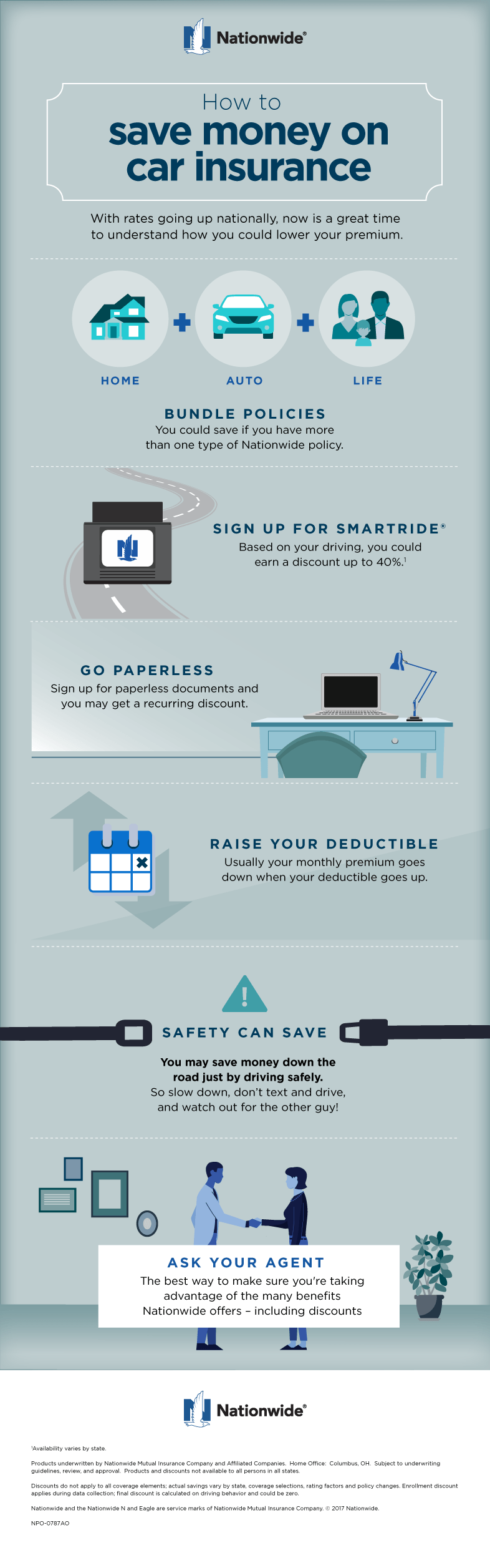
Calling or meeting with a personal insurance agent is another way to get life insurance. Some insurance companies offer discounts to customer who bundletheir policies, like having homeowner, auto and life insurance all with the same carrier.
The advantage to using personal insurance agents is they already understand your financial needs and they care about you as a long-term customer. They’ll spend the time to discuss the various life insurance types so you can find the best one for you. The disadvantage to using your personal agent is that they may be tied to only one insurance carrier, so they may not be able to offer you life insurance options from other companies.

What’s next?

Once you’ve chosen the policy you want and gotten a quote, you’ll apply for the insurance. That involves speaking with an insurance agent, even if you got your quote online. The agent will ask some questions and discuss the policy you chose. The agent will also send you paperwork to fill out and sign.
It’s likely that you’ll need a medical examination as the next step. The company will contact you to set up a time. The examiner will come to your home or office for some basic testing, such as determining your weight, getting a blood sample, perhaps an EKG, and listening to your heart.
This entire underwriting process can take a few weeks. Assuming everything checks out, the insurance company will send you the policy approval and ask for payment, if you haven’t already given a deposit. The premium might be different than in the original quote, depending on the results of your  medical exam and risk category.

Wednesday, March 1, 2017

8 Tips To Keep Your Family Safe From Heating Fires

Hey ya'll although the weather has been great lately I am sure we still have some cold Virginia days ahead.  I found this article about how to take care of your house and appliances to prevent house fires.  If you have ever known someone who has experienced a house fire, you know how terrible they can be.  Follow these easy tips to keep you family safe.  If you need to get your house insured give me a call!


Overall, heating equipment is the second leading cause of U.S. home fires and home fire deaths. There are between 350,000 and 400,000 house fires in the United States every year that result in almost $8 billion in annual damages, according to the National Fire Protection Association.

A heating fire can be catastrophic to a homeowner. Space heaters, fireplaces and water heaters are the biggest culprits but any type of heating element, including stoves and heating units, can cause fires.

Here are eight tips to keep you and your family safe from home heating fires this winter:

Inspect your furnace
Contact an HVAC professional to inspect your furnace and clean all the ducts. Remember to change your furnace filter each month during the winter and to remove all flammable material from the area around your furnace.

Clean your chimney
If you use your chimney a half-dozen times or more each year, it is a good idea to have it cleaned of soot and creosote every year. If you don’t want to hire a chimney sweep, consider a Creosote Sweeping Log, which can be bought at any home improvement store.

Check your chimney for structural damage
Make sure your chimney doesn’t have any cracks. If your chimney does have air leaks, it can change the flame in the fireplace and possibly ignite and cause a fire outside the fireplace.

Use a diffusion screen with your fireplace
A diffusion screen will prevent a flaming log from rolling out of the fireplace or sparks from popping out to cause a fire. If you have carpeting or wood flooring in front of your fireplace, it’s especially important to use a diffusion screen.

Be careful with space heaters
According to the U.S. Fire Administration, space heaters are involved in 74 percent of fire-related deaths. The best way to prevent a home fire caused by a space heater is to purchase one with an emergency cut-off so that it will automatically shut off if tipped over or accidentally knocked down. Otherwise, if it falls on the carpeting and doesn’t turn off, it could easily ignite a fire.
Never leave space heaters unattended. And make sure you place your heater on a flat, level, non-flammable surface such as ceramic tile rather than on a carpet. Don’t place space heaters near curtains, bedding or anything flammable, and make sure you are plugging the space heater into a GFI (Ground Fault Interrupter) system, so that if a malfunction does occur, the electricity will automatically turn off.

Check your water heater
As your water heater gets older, the thermostat and the heating element inside will start to deteriorate and the flame will become inconsistent. This could cause a flash fire, particularly if the water heater is in the garage where it is susceptible to wind or changes in air supply that could be caused by someone opening or closing a door.

Give your boiler a wide berth
Be careful not to put flammable items, such as boxes and newspapers, around your boiler system.

Don’t forget about the laundry room
Most homeowners don’t realize the laundry room can be a source of home fires due to the duct that connects to the back of the dryer and collects flammable lint. Homeowners should have their duct cleaned at least once a year. Your dryer doesn’t capture 100 percent of your lint and some of it ends up in the ducts, and that material is very flammable. If you have enough dryer lint built up in the duct you can have a huge fire.

Monday, February 27, 2017

Safe Driving Starts With An Annual Vision Screening

It's so easy to get upset driving these days.  Even if you follow all of the rules of the road, it seems that inconsiderate drivers are zipping around every turn.  To make things worse, many drivers do not have their eyes screened regularly. This is an interesting article about why people don't get their eyes checked and how proper vision is the basic building block of safe driving.


Original Article By Nationwide

Psych yourself out about a vision test and you can delay diagnosing treatable conditions that will help you see and drive better.

Eye care professionals can sometimes fix a problem or minimize the symptoms with a change of prescription or drops that can help drivers cope with glare. Still, many older drivers delay their eye check-ups partly for fear of losing their licenses.

Common fears among drivers

“We have had patients that we can’t believe drove to us,” says Mark Prussian, administrator, Eye Care Institute, Lexington, Kentucky.

He added, “People don’t like to have their independence threatened. They are afraid a doctor will take away their drivers’ licenses. But that won’t happen. Doctors can’t have drivers’ licenses taken away from their patients, though they may have conversations with those patients and encourage them to allow others to drive them places.”

Even drivers whose vision is not impaired may have medical conditions that make it dangerous for them to operate motor vehicles. Diabetes, high blood pressure and strokes, all of which can cause physical responses that make driving dangerous, are just some of the medical conditions that can be detected through an annual eye exam. That’s why such exams are continually recommended to people of all ages, Prussian says.

Older Drivers

Patients over age 60 most commonly have more visual concerns while driving and in everyday life. The concerns include the inability to easily read road signs, especially in unfamiliar locales; dim colors; the presence of halos around objects, and vision, says Steven A. Loomis, president of the American Optometric Association.

“As we age, most of us develop some degree of medical changes to our eyes, including cataracts, ocular surface disease, glaucoma and macular degeneration. All of these conditions require diagnosis and management from a doctor of optometry or ophthalmology,” Loomis says.

“Often, vision can be improved with an updated pair of glasses or enhanced treatments of glasses like non-glare lenses. Other times, medical treatments are appropriate to treat the underlying clinical conditions. Most eye diseases begin silently without symptoms and are only diagnosed with a comprehensive professional eye examination.”

Glaucoma

One example is glaucoma, often called “the silent thief of sight,” a condition that damages the optic nerve. That nerve transmits information from the eye to the brain. Glaucoma is asymptomatic until it causes irreversible vision loss.

Some people are hesitant to seek eye exams, and specifically to undergo testing for glaucoma, because they fear pain from what was once the standard “air puff test”. During the test, the doctor releases a small burst of air at an eye – no equipment touches the eye – to measure the pressure within it.

Though the test is painless, many people find it so distasteful they count it among their greatest medical fears, Prussian says.

This test is now outdated. Most eye care experts use other tests for glaucoma, including the blue light test (Goldmann Tonometry). Doctors who use this test numb the patients’ eyes and then measure the pressure within the eyes. Patients feel nothing except an occasional rustle of eyelashes during that test.

The other parts of annual eye exams are equally painless.

Preparing for an eye exam

To best prepare for an eye exam, patients should provide a list of all medications – prescription and non-prescription – and dosages taken. They should also be prepared to share personal and family medical histories.

Annual eye tests generally include visual acuity tests (reading from eye charts), cover tests (when one eye is covered while the doctor looks into the other eye) and refraction (when a series of lenses are put before eyes to determine which provides the clearest vision).

“A visit to the [eye care professional] is easy, painless and, for most patients, very interesting and always rewarding,” Loomis says.
Monday, November 21, 2016

Need to save a little money for the Holidays?! Energy efficiency may be one of the ways to do it!

7 Ways to Stop Drafts in Your Home


Drafts, or air leaks, can come into your home through windows, fireplaces and even electrical outlets, making your house feel several degrees colder and driving up your heating bills. The potential energy savings from reducing drafts can range from 5% to 30% per year, according to the U.S. Department of Energy.

Here are seven ways to find and fix drafts in your home before winter’s frigid temperatures hit.


Windows and doors


Most people automatically think to check for gaps around their windows and doors, and many will opt to use self-sticking weather stripping or a decorative draft stopper to stop air leakage. Others will caulk around their doors and windows. Caulking, however, isn’t as easy as it sounds.
“Caulking seems easy until it’s coming out of the end of the tube and you can’t control it, it goes all over the place and it doesn’t go where you want it to go,” says Mark Clement, co-host of a home improvement radio show. The problem, he says, is there are so many different types of caulking to choose from. The best choice is to use a high-quality latex caulk that cleans up with water.
You should also check for cracked caulking around your doors and windows. If you find any cracks, you will need to re-caulk those areas to prevent cold air from seeping in. If you want to add an extra barrier between the outside air and your home, you could also install an insulating plastic film over your windows to provide an airtight seal.

An easy way to stop air leakage, says Clement, is to lock your windows. Sometimes a window will look closed but, until it is locked, it’s hard to tell if the window is shut tight, he says. If you can’t lock your window, try opening it all the way and closing it again to make sure the window is still on its track. If that doesn’t work, you might need to call a professional to check your window.


Floors


If you have an unfinished basement, there is a good chance your floors feel cold when you walk around in bare feet and even when you wear socks, Clement says. The best way to stop cold air from penetrating the floor is to add insulation under the flooring.


Cable lines and wires


Anywhere a cable, wire or pipe goes from inside to out, there is typically an air leak. If the hole around the wire or pipe is a quarter of an inch or less, you can use caulk to seal it, Clement says. If it is larger, use foam insulation to close the hole.


Electrical devices


Contractors often under-insulate light switches and plugs, says Clement. As a result, they can become wind tunnels. If you remove the electrical wall plate around your light switch or plug, you may see a gap between the device and the wall. You can fill up the cavity with low-expanding foam insulation. This video explains how to do it (but when in doubt, consult a professional).


Attics


Make sure your attic is properly insulated. It’s important to seal areas where exhaust fans, attic stairs and small holes allow cool air to seep into your home. Foam insulation and weather stripping can be added to the plywood or drywall in your attic to help seal up those areas.


Fireplaces


The damper inside your chimney is meant to keep the cold air out but since dampers are typically made of cast iron, they don’t entirely keep the cold away. One way to stop drafts from fireplaces is to insert a piece of thick foam insulation covered with decorative fabric at the fireplace opening when you aren’t using the fireplace.


Buffer your home with landscaping


Shrubs and trees planted around your home can help protect it from the wind in the winter and provide shade in the summer. For instance, says Clement, if you plant an evergreen tree in front of your house it will protect your home from the wind, keeping the cold air from hitting your house and windows directly.